
Data is delivered in your preferred format typically .CSV or Excel ready for import into your CRM or marketing automation platform.
- +1 (888)-840-3334
- reach@techdatapark.com
- 3080 Olcott St D205, Santa Clara, CA 95054, United States
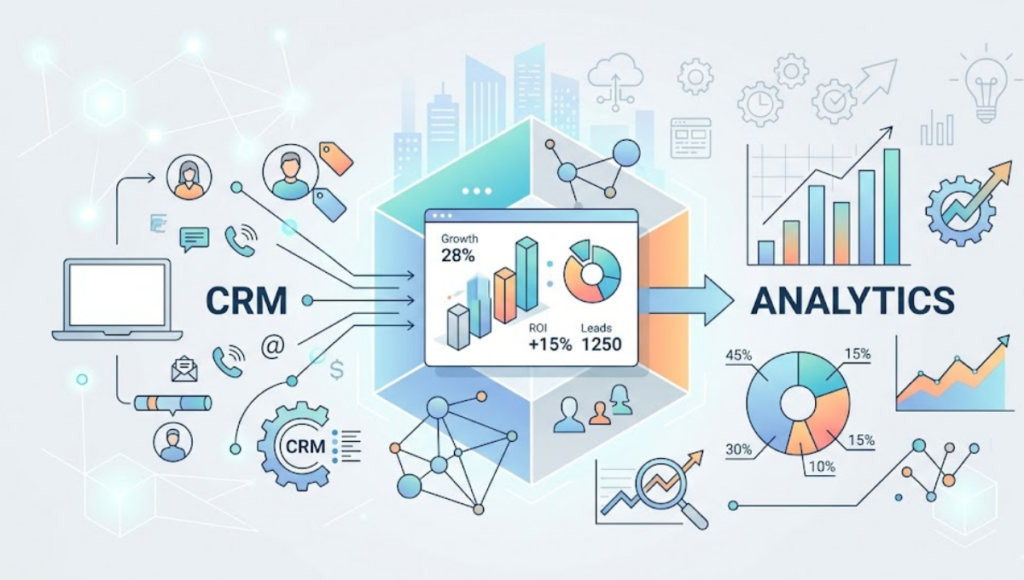
HubSpot powers marketing, sales, and service operations for over 228,000 paying customers worldwide from five-person startups to enterprises like Accenture and Shopify. That kind of adoption makes Companies Using HubSpot a valuable audience for B2B teams selling complementary tools, services, or solutions.
This guide breaks down who uses HubSpot by industry, company size, and geography, then shows you how to leverage that intelligence for targeted outreach.
Companies using HubSpot range from fast-growing startups to global enterprises like Accenture, Shopify, Trello, DoorDash, Trustpilot, Casio, Canva, WWF, Crunch Fitness, and Airstream. The platform handles CRM, marketing automation, sales enablement, and content management for organizations across nearly every industry you can think of.
What makes HubSpot’s customer base interesting is the sheer variety. A five-person marketing agency might use the free CRM to track leads, while a multinational corporation deploys the enterprise suite across dozens of teams and time zones. Both find value, though they’re using completely different feature sets.
The common thread? Organizations that want their marketing, sales, and service teams working from the same system rather than juggling disconnected tools.
HubSpot reports serving over 228,000 paying customers in more than 135 countries. That number has climbed steadily each year as more B2B teams adopt inbound marketing approaches and look for unified platforms.
Worth noting: the 228,000 figure counts paying subscribers. When you factor in free CRM users, the total number of organizations on HubSpot reaches into the millions. Many Companies Using HubSpot start with the free tier and upgrade as their operations grow more complex.
In the broader CRM market, HubSpot holds roughly 6-7% market share. That positions it as a strong mid-market player in a $112.91 billion global market where Salesforce dominates the enterprise segment.
The picture looks different when you narrow the focus to marketing automation specifically. In that category, HubSpot captures a much larger slice often cited around 30-35% depending on which market segment you’re measuring.
| CRM Platform | Market Position | Primary User Base |
|---|---|---|
|
Salesforce |
Market leader (~20% share) |
Enterprise |
|
HubSpot |
Strong mid-market (~6-7% share) |
SMB to Mid-Market |
|
Zoho |
Growing challenger |
SMB |
|
Microsoft Dynamics |
Enterprise alternative |
Mid-Market to Enterprise |
Salesforce owns the enterprise conversation. HubSpot, meanwhile, has become the default choice for companies using HubSpot that want an all-in-one platform without the implementation complexity Salesforce often requires. Zoho competes primarily on price, and Microsoft Dynamics appeals to organizations already deep in the Microsoft ecosystem.
HubSpot has maintained double-digit revenue growth year over year, reaching $3.1 billion in 2025 revenue. More recently, the company has pushed into the enterprise segment with features like custom objects, advanced permissions, and business units a clear signal that it wants to compete more directly with Salesforce for larger accounts.
Geographically, North America remains the largest market, but HubSpot has invested heavily in EMEA and APAC. New offices, localized support teams, and regional partnerships have accelerated international adoption.
Are you Looking for Verified Technology Users List?
Companies Using HubSpot come from virtually every B2B vertical, though certain industries show stronger adoption patterns than others.
Software and technology
Technology companies represent HubSpot’s largest customer segment. Firms like Upwork, Trello, and Axosoft use the platform to align marketing and sales around product-led growth. Native integrations with developer tools and robust APIs make HubSpot particularly attractive to tech-forward teams.
Professional services
Marketing agencies, consulting firms, and B2B service providers rely on HubSpot to manage client pipelines and track campaign performance. Many agencies also become HubSpot partners, offering implementation and optimization services to their own clients.
Manufacturing
Manufacturers like Airstream have adopted HubSpot to modernize sales processes that were traditionally relationship-driven and hard to track. The platform helps manage dealer networks, nurture leads through long sales cycles, and distribute educational content to prospects.
Financial services
Banks, fintech startups, and insurance companies use HubSpot for customer relationship management and marketing automation. The platform’s permission-based contact management aligns well with financial services regulatory requirements around data handling and consent.
Healthcare
Healthcare organizations leverage HubSpot for patient engagement, appointment scheduling workflows, and educational content distribution. While HubSpot itself isn’t HIPAA-certified, many healthcare marketers use it for communications that don’t involve protected health information.
The global footprint of Companies Using HubSpot reflects its evolution from a Boston-based startup to an international platform company.
United States
The U.S. accounts for roughly 60% of HubSpot’s total customer base. Adoption concentrates in technology hubs—San Francisco, Boston, New York, Austin—though you’ll find users in every state.
United Kingdom
The UK leads European adoption, with strong uptake among London-based agencies, SaaS companies, and professional services firms. HubSpot’s Dublin office serves the broader EMEA region from nearby.
Canada
Canadian adoption mirrors U.S. patterns. Toronto and Vancouver’s technology sectors show particularly strong HubSpot usage.
Australia
Australia represents HubSpot’s primary APAC market. Sydney and Melbourne-based businesses drive most of the regional adoption.
Germany
Germany leads continental European adoption, fueled by the country’s strong B2B manufacturing and technology sectors.
HubSpot’s tiered pricing from free to Enterprise means Companies Using HubSpot at every revenue stage can find an appropriate entry point.
Small business under $10M
Small businesses typically start with HubSpot’s free CRM or Starter tiers. The appeal is straightforward: ease of use and the ability to scale without switching systems later.
Mid-market $10M to $100M
Growing companies in this range often move to HubSpot Professional tiers. Advanced automation, custom reporting, and team management features become more important as operations get more complex.
Enterprise over $100M
Large enterprises like Accenture, Casio, and Zendesk use HubSpot Enterprise for unified data across global marketing and sales operations. Deployments at this level typically involve custom integrations, dedicated support, and multiple hubs working together.
Employee headcount offers another way to understand HubSpot’s customer distribution.
1 to 50 employees
Startups and small teams make up the largest portion of HubSpot’s customer count by volume. Many begin with free tools and upgrade as their operations mature.
51 to 200 employees
Scaling companies at this stage typically require more sophisticated workflows, team permissions, and reporting. Professional-tier products become the norm.
201 to 1000 employees
Mid-size organizations often have dedicated marketing and sales departments, each with specific requirements. Multi-hub deployments combining Marketing Hub, Sales Hub, and Service Hub become common.
Over 1000 employees
Enterprise organizations with complex, multi-division structures represent HubSpot’s fastest-growing segment. Many run HubSpot alongside other enterprise systems like Salesforce or SAP.
A HubSpot customers list is a database of organizations currently using HubSpot, enriched with contact information and company details. Several types of B2B teams find this data valuable.
Sales and business development teams
Sales teams use HubSpot user lists to identify companies already invested in marketing technology. Prospects with existing tech budgets and familiarity with integrated tools tend to be warmer leads for complementary solutions.
Marketing agencies
Agencies target HubSpot users to offer implementation, consulting, training, or complementary services. Knowing a prospect’s tech stack makes outreach more relevant from the first touchpoint.
SaaS companies
Software vendors selling integrations, add-ons, or alternatives to HubSpot use customer lists for competitive positioning and partnership development.
Service providers
Consultants, trainers, and implementation partners use HubSpot customer data to find organizations that might benefit from help maximizing their platform investment.
Recruiters
Talent acquisition teams target marketing and sales professionals at HubSpot-using companies. Candidates at HubSpot shops often have relevant skills and experience with modern marketing operations.
Once you have access to verified HubSpot customer data, several outreach approaches become practical.
Targeted email campaigns to HubSpot users can highlight relevant integrations, services, or solutions. Deliverability matters here, TechDataPark maintains 90% email deliverability across its datasets, which helps ensure messages actually reach inboxes rather than bouncing.
Direct phone outreach using verified phone numbers allows for immediate conversations with decision-makers. Knowing the prospect already uses HubSpot gives you a natural conversation opener and common ground.
Account-based marketing, deployed by 85% of B2B marketing leaders according to a Harris Poll survey, treats individual companies as markets of one. Firmographic data (company size, industry, revenue) combined with technographic data (tools in use) enables personalized campaigns targeting specific high-value accounts.
LinkedIn and social selling benefit from contact-level data that includes social profiles. You can connect with the right people at Companies Using HubSpot and engage them with content relevant to their role and tech stack.
Ready to reach HubSpot users? Request a free sample list to evaluate data quality before committing.
A comprehensive HubSpot customers database includes multiple data categories. Here’s what to expect:
TechDataPark provides 40+ data attributes across technographic, firmographic, and demographic categories. The depth allows teams to segment precisely and personalize outreach at scale.
Access TechDataPark's Verified Technology Databases
Connect with verified IT decision-makers and technology leaders.
Not all data delivers the same results. Verified, accurate data performs measurably better than scraped or outdated lists.
TechDataPark’s 7-tier verification process maintains 95% contact accuracy. Every contact is 100% opt-in, supporting permission-based outreach that builds trust rather than damaging relationships.
TechDataPark continuously refreshes data to reflect real-time market changes. The process combines intelligent automation with manual review by experienced data professionals.
TechDataPark maintains 95% contact accuracy through a 7-tier verification process that validates each record before delivery.
Yes. You can submit your requirements and request a free sample list to review data quality before purchasing.
All TechDataPark data collection and management practices align with global regulations including GDPR, CCPA, and CAN-SPAM.
Data is delivered in your preferred format typically .CSV or Excel ready for import into your CRM or marketing automation platform.
Technographic detection methods identify HubSpot usage through multiple signals including website code analysis, job postings, and technology adoption patterns.

Emma Wilson is a marketing strategist with a passion for using data to drive business success in the tech industry. At TechDataPark, Emma focuses on creating content that helps companies tap into tech user lists to reach decision-makers and grow their sales pipeline. With years of experience in digital marketing and data solutions, she’s adept at turning complex data into effective marketing strategies. When Emma’s not writing or strategizing, she’s likely researching the latest trends in tech marketing and finding innovative ways to enhance lead generation.

How to Find Verified Okta Users Email Contacts for B2B Marketing The modern B2B technology market is becoming increasingly competitive, especially in industries such as cybersecurity, SaaS, cloud computing, and

Top Shopify Stores Using Stripe in 2026: Complete List for B2B Sales & Marketing The ecommerce industry continues to expand rapidly, and technology adoption has become one of the strongest

In today’s competitive B2B technology market, reaching the right audience is essential for improving sales performance, increasing conversions, and building long-term business relationships. Companies offering CRM solutions, ERP services, SaaS